5 Hidden Features of the Acemagic K1 Mini Pc You Must Know About
The Acemagic K1 Mini Pc has attracted attention for packing desktop-style capability into a compact chassis. Many buyers look at raw specs — CPU model, RAM size, and storage capacity — but the K1 includes several lesser-known features that materially change how it performs in real-world scenarios. This article uncovers five hidden features that matter to buyers who plan to use the K1 as a home theater PC, lightweight workstation, edge server, or digital signage appliance. It also provides a balanced analysis, a practical buying guide, and a comparison with other compact systems that buyers typically consider.
Why these hidden features matter
Mini PCs are judged by size, price, and headline specs, but long-term satisfaction often depends on details: upgrade pathways, firmware control, multi‑display behavior, mounting options, and platform compatibility. The Acemagic K1 hides capabilities under its case and in its firmware that, when understood, let users tailor the device to specific tasks — from a silent media center to a compact virtualization host. The rest of this article explores those features, explains real-world use cases, and helps buyers decide whether the K1 is the right choice.
Hidden Feature 1: Flexible internal storage and expansion options
What it is
Beyond the advertised SSD and RAM, the K1 often includes internal expansion options such as one or more M.2 slots and space for a 2.5" drive depending on the configuration. These slots are not just for increasing capacity — they enable tiered storage strategies (fast NVMe boot + high-capacity SATA data) and allow users to configure the machine for specialized roles.
Why it matters
For a media server or a photo/video editor working with large files, being able to combine a high-speed NVMe drive for the OS and applications with a larger 2.5" HDD or SATA SSD for media libraries is a practical advantage. Buyers who care about future-proofing will value the ability to upgrade storage rather than replace the whole unit.
Real-world use cases
- Home theater/media server: Store large movie libraries on a high-capacity SATA drive while keeping the OS and playback app on an NVMe drive for snappy responsiveness.
- Edge workstation: Use a fast NVMe for scratch space during photo/video edits and a separate drive for completed projects or backups.
- Small office appliance: Add mirrored drives for a lightweight local backup or NAS-style redundancy.
Hidden Feature 2: Firmware-level performance and thermal profiles
What it is
The K1 exposes multiple performance and fan profiles in its BIOS/UEFI. These modes usually go by names such as "Silent," "Balanced," and "Performance." They adjust CPU power limits, fan curves, and thermal thresholds without requiring third-party utilities.
Why it matters
Noise and thermals are major buying concerns for mini PC owners. A living-room HTPC needs to be quiet; an office machine can accept a bit more fan noise for higher sustained CPU throughput. Firmware-level profiles let users switch behavior at boot time or via the BIOS rather than relying on less reliable software utilities that may not run consistently across OSes.
Real-world use cases
- Living room HTPC: Set the K1 to Silent mode to keep audible noise below background levels during movie playback.
- Batch processing: Select Performance mode during overnight encoding jobs and Balanced mode during daytime use to maintain comfortable ambient noise.
- Temperature-critical deployments: In compact enclosures or behind displays, adjust thermal limits to reduce thermal throttling while protecting components.
Hidden Feature 3: Multi-display and GPU acceleration tricks
What it is
Although compact, the K1 typically offers a combination of display outputs — for example, HDMI plus DisplayPort or a USB-C port with DisplayPort Alt Mode. Hidden within its firmware and driver stack are support details for multi‑stream transport (MST), hardware acceleration for video codecs, and display routing that enables dual 4K output or 4K60 depending on configuration.
Why it matters
Professionals and power users often require multiple high-resolution screens for productivity tasks, or flawless hardware-accelerated playback for media workflows. Knowing how the K1 handles multiple outputs and which ports support what resolutions helps buyers match the machine to their monitor setup.
Real-world use cases
- Dual-monitor productivity: A designer or programmer can drive two 4K monitors for wide workspace without sacrificing fluidity in windowed applications.
- Digital signage: Use multiple outputs to feed several displays from a single compact appliance in retail or exhibition contexts.
- Media playback: Hardware decoding for H.264/H.265/AV1 (depending on SKU) reduces CPU load and ensures smooth 4K streams from local or network sources.
Hidden Feature 4: Broad OS friendliness and light virtualization support
What it is
The K1's firmware and hardware mix are often compatible with both consumer Windows and mainstream Linux distributions. Additionally, many K1 configurations include hardware virtualization extensions (VT-x/AMD-V), allowing lightweight virtual machines or containers to run efficiently.
Why it matters
Buyers who plan to use the K1 as a compact development host, a testing machine, or an appliance for small-scale services will appreciate a platform that runs Linux cleanly and supports virtual machines. This flexibility expands the K1's suitability from a single-user desktop to a multi-role edge node.
Shop the latest Laptops & Computers picks on Amazon.
Shop Amazon →Real-world use cases
- Developer workstation: Run a Linux distribution natively for development tasks or host multiple small VMs for testing CI/CD scripts.
- Edge server: Deploy containerized services (e.g., web server, local caching) while using the host OS for logging and management.
- Home lab: Run a few lightweight VMs for network services, home automation hubs, or low-traffic self-hosted apps.
Hidden Feature 5: Mounting, cable management, and low-profile deployment
What it is
The K1 frequently ships with VESA mounting options and thoughtful chassis features that make it easy to hide behind a monitor or tuck into a cabinet. Its port placement and small footprint support neat cable routing and low-visibility installations.
Why it matters
Buyers setting up a tidy workspace, kiosk, or public display care about how discreetly hardware can be deployed. The ability to mount the K1 behind a monitor or secure it under a shelf removes clutter, reduces theft risk, and simplifies integration into limited-space environments.
Real-world use cases
- Office consolidation: Mount the K1 behind a monitor for hot-desk setups and clean meeting rooms.
- Retail kiosks: Hide the PC and keep wiring protected while providing reliable compute at the point of sale or info display.
- Conference rooms: Use the K1 as a dedicated presentation appliance with one cable to the display and neat cabling hidden from view.
Detailed product review and analysis
Looking beyond the five hidden features, the Acemagic K1 Mini Pc positions itself as a versatile compact system. It is built for users who want more than a single-board computer but prefer the footprint and low power consumption of a mini PC. The chassis quality, port configuration, and internal layout are engineered to balance cooling with silence, and most SKUs include user-upgradeable components.
Performance and target workloads
Performance scales by configuration: care is advised when selecting between entry-level and higher-end SKUs. In general, the K1 handles typical office workloads (documents, spreadsheets, browser tabs) smoothly, is competent at media playback, and can drive light content-creation tasks. It is not designed as a replacement for mid- to high-end gaming desktops, but it serves well for casual gaming, retro emulation, and GPU-accelerated multimedia where the integrated graphics are tuned for decoding and encode tasks.
Thermals and acoustics
Thermal engineering in a mini PC is always a trade-off. The K1's firmware profiles permit buyers to make pragmatic choices: quieter operation for living-room use or higher sustained clocks for compute bursts. In constrained locations, buyers should expect the unit to raise fan speeds under extended load, but the ability to change profiles mitigates unpleasant surprises.
Ports, connectivity, and peripherals
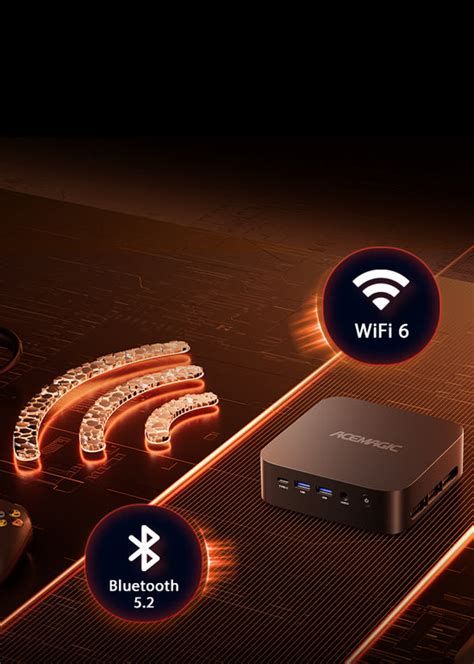
Typical K1 configurations include multiple USB ports (type A and potentially type C), one or more video outputs, an Ethernet jack, and a 3.5mm audio jack. Wireless connectivity frequently includes modern Wi‑Fi and Bluetooth variants. Buyers who need specific port types (for example, a second Ethernet port for routing tasks) should check the exact SKU before purchase.
Upgradeability and repairability
One of the K1's strengths is practical upgradeability. Access to RAM and M.2 slots without desoldering or complex disassembly appeals to users who prefer to buy a base model and upgrade later. This model of upgradeable mini PCs reduces obsolescence and can improve total cost of ownership for small businesses.
Software and driver considerations
Firmware updates improve compatibility and stability over time. Because the device targets both Windows and Linux audiences, driver maturity can vary by operating system and by the wireless or display chipset chosen in the SKU. Buyers who plan to run niche Linux distributions or older OS versions should verify driver support and community reports for the specific hardware revision.
Pros & Cons
Pros
- Compact and versatile: Small footprint with enough ports and power for everyday desktop, media, and light server tasks.
- Upgrade options: Internal M.2 and, in some builds, 2.5" drive space and user-replaceable RAM make future upgrades practical.
- Firmware controls: BIOS-level performance profiles and fan control let buyers tune noise and thermal behavior without third-party tools.
- Multi-display support: Multiple video outputs and hardware video acceleration enable smooth 4K playback and productive multi-monitor setups.
- Deployment-friendly: VESA mounting and tidy cable routing simplify desktop integration and hidden installations.
Cons
- Limited raw gaming headroom: Integrated graphics are optimized for media and productivity, not sustained AAA gaming.
- Configuration variability: Feature set can differ between SKUs; buyers must check the spec sheet closely.
- Thermal ceiling: Small enclosures have thermal limits; sustained heavy loads may trigger throttling unless configured carefully.
- Driver variability: Linux support can depend on component revisions; community feedback is useful before deploying specialized builds.
How the K1 compares: quick reference table
| Feature | Acemagic K1 Mini Pc | Typical Intel NUC-class Mini PC | Raspberry Pi 4 (SBC) |
|---|---|---|---|
| Typical CPU class | Mobile-class Intel/AMD options (config-dependent) | Similar mobile-class or low-power desktop CPUs | ARM-based SoC (efficient, lower single-thread performance) |
| Upgradeability | M.2 and RAM upgrade in many SKUs; sometimes 2.5" drive space | Generally excellent — NVMe and RAM accessible | Limited (microSD and USB for expansion) |
| Ports & displays | Multiple video outputs, several USB ports, Ethernet | Comparable or slightly more flexible port mix | HDMI + USB ports; fewer native display options |
| Multi-monitor support | Dual displays at high resolution possible | Often supports dual or triple displays depending on model | Possible but limited by GPU/port bandwidth |
| Price & value | Competitive for configured features | Varies widely — premium models cost more | Lowest cost; hobby-focused |
| Best use cases | HTPC, office PC, small edge server, kiosk | Similar — can be tailored to higher performance | Education, DIY projects, low-cost prototypes |
Buying guide: what buyers typically care about
When choosing a K1 configuration, buyers balance price against specific requirements. Below are practical checklist items that reflect common buyer priorities.
1. Define the primary role
Choose the base SKU that matches the primary task. For a living-room video player, prioritize a configuration with strong hardware video decode and quiet operation. For a compact office workstation, prioritize CPU speed and more RAM. For an edge node, prioritize Ethernet reliability and storage capacity.
Discover deals on Laptops & Computers — updated daily.
Browse Now →2. CPU and integrated graphics
Consider clock speeds and core counts appropriate for the workload. Integrated graphics are suitable for media and light content creation; buyers expecting heavy GPU workloads should consider external GPU options or a more powerful desktop-class alternative.
3. RAM and storage needs
Ram is often the first upgrade to consider: 8 GB is a reasonable baseline for general use, 16 GB or more is advisable for multitasking, creative work, and light virtualization. If the SKU includes only a single removable drive, plan storage upgrades accordingly. Look for NVMe support if fast IO matters.
4. Ports and connectivity
Check for the exact video outputs and USB types. Buyers who use multiple monitors should confirm supported resolutions and refresh rates per port. For office or network appliances, a wired Gigabit Ethernet (or faster) port is often essential.
5. Thermal profile and acoustics
Review independent reviews or community feedback for real-world noise levels. If the machine will live in a quiet space, prioritize the Silent or Balanced firmware profile and confirm noise behavior under expected loads.
6. Operating system and driver support
Confirm that the desired OS is supported and that drivers for Wi‑Fi, Bluetooth, and GPU are available for the chosen OS. For Linux deployments, check forums and distro compatibility reports for the K1 revision that matches the intended purchase.
7. Warranty and support
Check the warranty period and how the manufacturer handles RMA and firmware updates. For business deployments, consider extended support or local resellers with service options.
8. Physical deployment
If the K1 will be mounted behind a display or placed in a tight space, verify the included mounting hardware and port orientation. Ensure adequate ventilation for sustained workloads.
Conclusion
The Acemagic K1 Mini Pc is more than a small form-factor machine with sensible baseline specs. Its lesser-known capabilities — internal expansion, BIOS-level profile control, robust multi-display handling, OS flexibility, and deployment-friendly chassis features — make it a flexible option for a wide range of buyers. Prospective owners should match a K1 configuration to the task at hand, verify driver and OS compatibility for their chosen build, and take advantage of the upgrade paths that extend the device's useful life. For many buyers, understanding these hidden features turns the K1 from a convenient compact PC into a customized, long-term tool for productivity, media, and small-scale server roles.