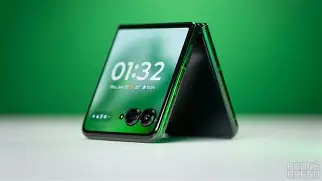
A Professional's Take on the New Motorola Razr Plus 2025
Category: Mobile Phones
Introduction
The Motorola Razr Plus 2025 arrives as another chapter in the compact foldable segment aimed at buyers who prioritize pocketability without sacrificing modern smartphone capabilities. Unlike slab-style flagships, the Razr line targets a specific set of behaviors: frequent one-handed interactions, style-conscious users, and those who value a small footprint during commute or travel. This article delivers a measured, professional assessment of the Razr Plus 2025—examining design, performance, camera behavior, battery life, software experience, durability, and real-world suitability for different buyer profiles. Where helpful, comparisons to competing foldable designs are included to place the device in context for pragmatic purchasing decisions.
Design and Build
The Razr Plus 2025 continues Motorola’s foldable heritage with a vertical clamshell hinge, focusing on thinness and refined cosmetics. The device typically folds to roughly half the size of a conventional smartphone, making it easier to slip into slimmer pockets and smaller bags. Key design considerations for buyers include the outer cover display, the crease treatment, tactile materials, and the hinge mechanism’s feel and long-term reliability.
In use, the outer display plays a major role in daily interactions: quick notifications, media controls, contactless payments, and camera previews. For many professional users, this reduces the frequency of opening the clamshell, saving time and preserving battery life. The internal main display emphasizes immersive content and multitasking when unfolded; its aspect ratio favors vertical scrolling applications and social feeds.
Materials and finish typically skew toward a premium feel—glass or strengthened polymer on the exterior with a metal frame—though weight and grip remain trade-offs. Motorola’s approach aims for a balance between aesthetics and practicality rather than extreme ruggedization.
Display and Hinge Mechanics
The Razr Plus 2025’s headline is its pair of displays: an internal foldable panel for primary tasks and an outer “cover” display for quick interactions. Improvements in panel brightness, color accuracy, and refresh rate compared to prior models may be present, which materially affects outdoor legibility and gaming responsiveness.
Hinge engineering is central to perceived quality. A smooth, secure hinge that minimizes the crease visibility and avoids debris ingress increases confidence for long-term ownership. For everyday users who fold and unfold dozens of times per day—during meetings, while commuting, and while transitioning between pockets—the hinge must feel consistent and silent. Professionals will appreciate a hinge that supports half-open modes for hands-free video calls or camera shooting angles.
Find top-rated Mobile Phones products at great prices.
See Deals →Performance and Software
Motorola ships the Razr Plus 2025 to suit a spectrum of users: from social-focused consumers to productivity-oriented professionals. Performance cores and GPU capabilities need to manage multitasking, medium-to-heavy app usage, and occasional gaming. The software experience—Android with Motorola’s additions—aims to offer useful fold-specific features like optimized split-screen, app continuity across displays, and context-aware gestures.
For business users, responsiveness when switching between apps, prompt notifications, and secure biometric unlocking (generally a side-fingerprint or under-display sensor on foldables) are everyday expectations. Software update cadence and long-term OS support are also crucial: buyers should check Motorola’s promised update policy to assess longevity and security patch delivery.
Camera System and Real-World Photography
Foldables historically trade some camera capability for form factor. The Razr Plus 2025 typically attempts to bridge this gap by offering a versatile primary sensor and computational photography enhancements. Real-world use cases—document capture during meetings, casual social photography, quick video calls—demand consistent exposure, rapid focus, and reliable dynamic range.
The outer cover display often doubles as a viewfinder for selfie and portrait captures, allowing higher-quality images without unfolding. This is a meaningful convenience for users who frequently take photos on the go. Low-light performance, stabilization for video, and processing speed are practical attributes that shape everyday satisfaction more than headline megapixel counts.
Battery Life and Charging
Battery longevity is a critical question for most buyers. The Razr Plus 2025’s compact folded silhouette constrains battery size relative to slab phones; therefore, optimization of display brightness, refresh rate management, and software power-saving features become essential. For commuters and professionals who rely on a single charge throughout a workday, observed endurance will determine real-world viability.
Charging speed—both wired and wireless—matters for typical daily routines. Quick top-ups during breaks or in transit reduce anxiety. Buyers who travel frequently should look closely at the device’s charging profile and whether it supports widely available fast-charging standards.
Durability and Repairability
Durability remains a practical concern: foldables introduce more moving parts and a visible crease. Prospective owners should consider screen protection approaches (cases designed for foldables, approved screen protectors), the presence of any IP dust/water resistance rating, and warranty terms that cover hinge or display issues. Repairability is often limited compared to standard phones; consumers should evaluate service options and expected out-of-warranty repair costs before purchase.
Shop the latest Mobile Phones picks on Amazon.
Shop Amazon →Security and Enterprise Considerations
For business deployment, security features—encryption, biometric authentication, regular security patching, and compatibility with mobile device management (MDM) solutions—are important. The Razr Plus 2025 may offer enterprise-friendly features, but organizations should validate hardware-backed security controls and update policies before rolling the device out to employees.
Pros & Cons
- Pros:
- Compact, pocketable form factor that reduces bulk while preserving a large unfolded display for content and multitasking.
- Convenient outer display for quick actions, notifications, and high-quality selfie use without unfolding.
- Distinctive aesthetic and tactile experience that appeals to users who value design and novelty.
- Potential for improved multitasking with split-screen and fold-aware software features.
- Good for mixed-use—social media, casual photography, and light productivity tasks—when balanced against size constraints.
- Cons:
- Battery capacity is typically smaller than in similarly priced slab phones; heavy users may need a mid-day top-up.
- Repair costs and long-term durability can be concerns; hinge and display repairs are often expensive.
- Not always the best choice for maximum camera versatility; flagship slab phones may outperform in zoom and low-light conditions.
- Price can be at a premium relative to traditional phones with comparable raw specifications.
- Accessory ecosystem is smaller and cases must be specifically designed for foldables.
Comparison: How the Razr Plus 2025 Stacks Up
The following table compares the Razr Plus 2025 qualitatively against two typical reference points: a previous Razr generation and a mainstream competitor in the clamshell foldable market. This is intended to highlight decision factors rather than raw spec sheets.
| Category | Motorola Razr Plus 2025 | Previous Razr Model | Main Competitor (e.g., clamshell foldable) |
|---|---|---|---|
| Design & Portability | Refined clamshell with slimmer profile and larger cover display | Good pocketability, smaller cover screen | Comparable; some competitors focus on slightly larger internal screens |
| Display Experience | Improved internal panel brightness and smoother outer display interactions | Earlier panels with visible improvements in newer model | Often similar; some competitors emphasize higher refresh rates |
| Performance | Balanced for everyday multitasking; suitable for most productivity tasks | Comparable but may lag in peak performance | Varies; some offer higher-end silicon for gaming |
| Camera | Capable for casual and social photography; strong cover-preview workflow | Incremental camera upgrades | Competitors may lead in zoom or low-light |
| Battery & Charging | Optimized but smaller battery than slab phones; efficient charging recommended | Similar constraints | Some competitors achieve better endurance through larger battery cells |
| Durability & Repair | Improved hinge reliability expected; repairs remain costly | Known hinge and screen constraints | Industry-wide repair premium for foldable panels |
| Value Proposition | Strong for buyers prioritizing pocketability and style | May be better value used or on sale | Some competitors offer similar features at different price points |
Buying Guide: Who Should Consider the Razr Plus 2025?
Making the right decision depends on how the device will be used day-to-day. The following guide helps match user needs to the Razr Plus 2025’s strengths and trade-offs.
For Commuters and Travelers
- The Razr Plus 2025 excels for those who frequently carry a phone in a tight pocket or compact bag. Quick access to notifications on the outer display reduces interruptions and makes checking transit times or messages discreet and fast.
- Consider battery pack options or fast charging if long travel days are common.
For Content Consumers and Social Media Users
- An unfolded large display and the ability to preview selfies with the cover screen are valuable for creators and social users. The device is well-suited to browsing, short-form content, and instant sharing workflows.
- Confirm camera attributes and stabilization if video content creation is a priority.
For Professional and Productivity Use
- Business users who prioritize mobility and one-handed interactions may find the Razr Plus 2025 appealing. However, for heavy spreadsheet work or prolonged typing, consider pairing the device with Bluetooth peripherals or opting for a larger-slab device for extended sessions.
- Verify enterprise compatibility (VPN/MDM support) and update policy if organizational deployment is intended.
For Photographers and Power Users
- While adequate for everyday photography, the Razr Plus 2025 might not replace a flagship slab phone for users who require advanced zoom, superior low-light performance, or pro-level camera features. Assess camera samples and third-party reviews focusing on image fidelity before deciding.
- Power users who demand the top-tier processing headroom for gaming or heavy multitasking should compare benchmarked performance against competitor devices.
Purchase Practicalities
- Check warranty specifics for hinge/display coverage and any extended service plans or accidental-damage protection that may be available.
- Confirm carrier compatibility and whether the phone is sold unlocked or tied to specific networks, especially for international travelers.
- Inspect the accessory ecosystem—cases, screen protectors, and charging options—to protect the investment.
Practical Tips Before Buying
- Test the hinge and fold action: If possible, try the device in person to evaluate the hinge smoothness and crease visibility. Handling reveals much about perceived quality.
- Evaluate the outer display workflow: Simulate common tasks—answering messages, previewing photos, controlling music—to determine if the cover screen meaningfully speeds daily routines.
- Check software update guarantees: Longer OS support increases the device’s usable lifespan and security posture.
- Compare battery behavior under realistic conditions: Look for independent battery-life tests or long-term user reports rather than relying solely on advertised capacities.
- Plan for protection: Budget for a case or protective plan—repairs for foldables are generally more expensive than for non-folding phones.
Conclusion
The Motorola Razr Plus 2025 represents a mature take on the clamshell foldable formula, designed for users who want the convenience of a compact phone without giving up a large, modern display when needed. Its strengths—portability, the utility of a cover display, and an engaging design—make it appealing for commuters, social users, and buyers who value style and novelty in their daily device. However, potential purchasers should weigh the trade-offs: smaller battery capacity relative to slab phones, potentially higher repair costs, and camera or performance compromises compared to the very highest-end non-folding flagship devices.
Ultimately, the Razr Plus 2025 is best for those who will meaningfully benefit from its foldable advantages—frequent one-handed interactions, the convenience of a cover screen, and a compact footprint—while accepting the attendant trade-offs. For buyers who prioritize maximum battery life, the most robust camera systems, or the lowest long-term repair costs, a traditional slab phone may still be a better fit. For those seeking the balance between portability and modern smartphone function with a distinctive form factor, the Razr Plus 2025 is a compelling contender worth hands-on evaluation before purchase.