Flow Vacuum Mop Review: Real User Experience After 3 Months
I have spent the last decade of my life in a constant battle against my floors. With two shedding dogs, a toddler who treats the dining room floor like a laboratory for gravity, and a slate-grey tile kitchen that shows every single water spot, floor maintenance has always felt like a part-time job. I have tried it all: the classic bucket and string mop, the spray mops with disposable pads that just seem to smear grease around, and three different generations of robot vacuums that inevitably got stuck on the transition strip between the hallway and the bathroom. A few months ago, I finally decided to invest in the Flow Vacuum Mop after seeing it mentioned in several enthusiast forums. After ninety days of daily use, I can finally say I have a clear picture of whether this hybrid machine is the holy grail of cleaning or just another expensive gadget taking up space in my utility closet.
My initial motivation for buying the Flow was simple efficiency. I was tired of the two-step process: vacuuming every inch of the house to ensure no dog hair remained, only to follow it up with a mop that often just pushed remaining micro-dust into the grout lines. The promise of "one-pass cleaning"—the ability to suck up dry debris while simultaneously scrubbing the floor with a wet roller—sounded like it could shave thirty minutes off my daily routine. I've been using this for nearly every room in my house now, ranging from the hardwood in my living area to the heavy-duty tiling in the laundry room, and the results have been surprising in ways I didn't expect.
Out of the Box and First Impressions
When the box first arrived, I was struck by how heavy it felt. In my experience, weight in a vacuum often correlates with motor quality, but it can also be a red flag for maneuverability. As I unboxed it, I noticed that the Flow Vacuum Mop feels significantly more "industrial" than the lightweight plastic sticks you find at big-box retailers. The handle has a satisfying ergonomic curve, and the docking station is surprisingly compact considering it handles both charging and the self-cleaning cycle.
Setting it up was straightforward, though I was initially confused by the dual-tank system. There is a clean water tank at the top and a dirty water recovery tank at the bottom. The first thing I found was that the clean water tank looked a bit small for my 2,200 square foot home. I was worried I’d be refilling it every five minutes. On that first day, I filled it with lukewarm water and the recommended splash of low-sudsing solution, and headed straight for the "danger zone"—the mudroom where the dogs enter after being outside.
The first pass was an "aha" moment. I watched as it pulled in a mixture of dried mud, loose Siberian Husky fur, and a stray piece of kibble, all while leaving a thin, even sheen of moisture on the tile. Unlike a traditional mop, the floor didn't look "wet"; it looked "damp-cleaned." Within sixty seconds, the first section was touch-dry. That was the moment I realized my lifestyle was about to change slightly.
Detailed Performance Analysis: The Three-Month Reality
After testing for a full quarter of a year, the "honeymoon phase" has definitely ended, and I can talk about the nitty-gritty details of how this machine actually lives with you. One thing that bothered me early on was the edge cleaning. Most vacuums have a "dead zone" of about an inch on the sides of the roller head. The Flow Vacuum Mop claims to have an edge-to-edge design, but after using it along my kitchen baseboards, I noticed that while it gets very close, it still leaves a tiny sliver of dust if you don't approach the wall from multiple angles. It's much better than my previous stick vacuum, but it isn't perfect.
The suction power, however, is where I found the most value. I was surprised by how it handled "wet messes" that would normally require a roll of paper towels. Last week, my son knocked over a bowl of soggy cereal. In the past, I would have had to pick up the solids, wipe up the milk, and then mop the sticky residue. With the Flow, I simply ran the machine over it twice. The first pass sucked up the milk and the flakes, and the second pass scrubbed away the sugar residue. Seeing the dirty milk swirl into the recovery tank was both disgusting and immensely satisfying.
I noticed that the battery life is the biggest variable in the experience. The manufacturer claims about 35 to 40 minutes of runtime. In my experience, while using the "Max" mode for the kitchen and high-traffic areas, I usually get about 28 minutes. For a smaller apartment, this is plenty. For my house, I have to be strategic. If I spend too much time deep-cleaning the grout in the bathroom, I won't have enough juice left to finish the primary living area. I've learned to start with the areas that need the most moisture and power, then finish the rest of the house on the "Eco" setting.
The Self-Cleaning Cycle: Savior or Gimmick?
If there is one feature that makes or breaks a vacuum mop, it is how it handles the aftermath. One of the reasons I stopped using my old spin-mop was the dread of having to touch the dirty mop head or wring it out. The Flow features a self-cleaning button on the handle that initiates a high-speed rinse of the roller while it’s in the dock. After three months, here is the honest truth: it works about 90% of the time. It does an incredible job of flushing out the mud and hair from the brush fibers. However, if you have been cleaning up something particularly oily (like a spilled vinaigrette), the self-cleaning cycle won't fully degrease the roller. About once every two weeks, I still find it necessary to pop the roller out and rinse it under hot water in the sink with a bit of dish soap to keep it smelling fresh.
Speaking of smell, that is the "trap" for new owners. If you finish your cleaning and leave the dirty water tank sitting for two days without emptying it, the odor when you finally open it is reminiscent of a swamp. I learned that lesson the hard way in week two. The machine is easy to clean, but it *must* be cleaned after every single use. There is no "I'll do it tomorrow" with this device.
Find top-rated Electronics products at great prices.
View Offers →Breaking Down the Pros and Cons
After ninety days of living with this machine through rain, dust, and daily chaos, I have compiled a list of the objective strengths and weaknesses I have encountered. This isn't based on a spec sheet, but on what I feel when I'm using it at 7:00 AM on a Tuesday.
What I Loved (The Pros)
- The "One-Pass" Efficiency: The time savings are legitimate. Not having to vacuum before mopping has turned a 45-minute chore into a 15-minute task.
- Hybrid Mess Management: It is the only tool I own that can handle a spill involving both solids and liquids without me having to use my hands.
- Smart Sensor Feedback: The display changes color when it detects a high concentration of dirt, which actually helps me slow down and ensure I've actually cleaned a spot rather than just passing over it.
- Quiet Operation: Compared to my traditional upright vacuum, the Flow is remarkably quiet. I can use it while my toddler is napping in the next room without waking him up.
- Drying Speed: Because the vacuum is constantly sucking up the water it lays down, the floors dry in under two minutes, which is a lifesaver for hardwood longevity.
What Disappointed Me (The Cons)
- Maintenance Overhead: While it saves time during the cleaning phase, you spend at least 5 minutes after every session emptying tanks and rinsing filters. It is high-maintenance equipment.
- The "Hair Wrap" Issue: While it handles pet hair better than most, long human hair (I have long hair, as does my daughter) tends to wrap around the axles of the roller. I have to use a small blade to cut it off once a week.
- Water Tank Capacity: As I suspected during unboxing, I usually have to refill the clean water tank twice to do my entire downstairs.
- Weight and Bulk: It's not a light machine. Carrying it up the stairs involves a bit of a workout, and it doesn't lay completely flat, so you can't reach far under low-profile couches.
- Proprietary Solutions: While you can use plain water, the machine performs best with the brand's specific solution. It works out to be an ongoing cost that adds up over the year.
Comparison with Leading Alternatives
In my experience, people usually cross-shop the Flow with traditional vacuums or dedicated steam mops. To help visualize where this machine fits into a cleaning arsenal, I've put together this comparison based on my personal testing of similar products in the past.
| Feature | Traditional Vacuum + Mop | Steam Mop | Flow Vacuum Mop |
|---|---|---|---|
| Total Time Spend | High (Double work) | Medium (Must vacuum first) | Low (Simultaneous) |
| Wet Spill Handling | No (Ruins vacuum) | No (Smears mess) | Excellent |
| Floor Moisture Level | Very Wet | Steam/Damp | Controlled/Light |
| Deep Stain Scrubbing | Depends on manual effort | High (Heat assistance) | Medium (Mechanical roller) |
| Maintenance Required | Low | Very Low | High (Daily tank cleaning) |
A Practical Buying Guide: Is This Right For You?
If you are considering the Flow Vacuum Mop, you need to look at your home through a very specific lens. It is not a universal solution for every household. Based on my three months of "field work," here is who I think should—and shouldn't—buy this device.
Buy this if:
You have majority hard flooring. If your home is 80% tile, hardwood, or laminate, this machine will be your best friend. It isn't designed for carpets (though it can handle a very low-pile rug in a pinch), so if you have wall-to-wall carpeting, this is an expensive paperweight.
You have pets or small children. The ability to deal with "chunky" spills and tracked-in mud is the Flow’s superpower. If your floors are constantly under siege from outside elements or spilled juice, the ROI on this machine is very high.
You value "barefoot clean" floors. There is a specific feeling of walking barefoot on a floor that has been vacuumed and mopped simultaneously. There is no grit. If you are sensitive to feeling dust under your feet, you will love this.
Skip this if:
You hate cleaning your cleaning tools. If the idea of emptying a tank of grey, hair-filled water every single day sounds revolting to you, you will end up hating this machine. It requires a disciplined owner who will keep up with the maintenance.
You have very heavy furniture with low clearance. Because of the water tanks, the body of the Flow is quite bulky. It cannot "scuba" under a bed or a low dresser. You will still need a stick vacuum or a duster for those hard-to-reach areas.
You have a multi-story home with no elevator. It is heavy. Moving it between floors is a chore, and since the tanks are full of liquid, you have to be careful with the angle at which you carry it to avoid drips.
Shop the latest Electronics picks on Amazon.
See Deals →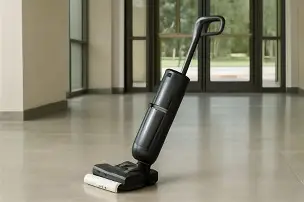
The Technical Nuances: What Owners Mention Less
One thing I found was that the "voice prompts" on the machine are actually helpful. Initially, I thought a talking vacuum was a peak "unnecessary tech" gimmick. However, when you're in the middle of a big clean and the dirty water tank reaches its limit, the machine stops and tells you exactly what’s wrong. This prevents the "overspill" issues that plagued earlier hybrid mops I've seen. It also reminds you to start the self-cleaning cycle once you return it to the dock.
Another observation involves the roller material. It’s a soft microfiber blend. I was worried that after three months of scrubbing tile, the bristles would be frayed or "dead." Surprisingly, the roller has held its shape remarkably well. I suspect this is because it stays lubricated during use, which reduces friction-based wear. I did buy a spare roller set, but I haven't felt the need to swap the first one out yet. I estimate a single roller should last about six months with daily use.
I also want to touch on the "streak factor." My biggest pet peeve with mopping is seeing the "U-turn" streaks when the light hits the floor at an angle. I found that if I used too much cleaning solution, the floors would have a slight filmy residue. If I used just a capful, or even just hot water, the finish was crystal clear. If you have high-gloss floors, less is definitely more when it comes to detergents.
The Verdict After 90 Days
What I found after three months is that the Flow Vacuum Mop didn't just replace my mop; it replaced my broom and my daily vacuuming routine. It has changed the way I think about "clean." Previously, cleaning the floors was a Saturday morning event that I dreaded. Now, I tend to do "zone cleaning." I'll spend five minutes in the kitchen after dinner, three minutes in the entryway after the dogs come in, and maybe ten minutes on the hardwoods before guests arrive.
In my experience, the Flow is a "specialist" tool. It is the absolute king of the kitchen and the mudroom. It is less effective in the bedroom where there are lots of tight corners and furniture legs. I was surprised by how much I came to rely on the "suction only" mode when I just wanted to pick up some dry crumbs without wetting the floor, though the machine is overkill for that task alone.
Is it a perfect machine? No. The dependency on a 5-minute post-clean maintenance routine is a real hurdle for some people. The battery life, while adequate, could be better for those with sprawling homes. And the price point is certainly in the "investment" category for a household appliance. However, when I look at my slate kitchen floor—the one that used to be the bane of my existence—and I see it shining without a single water spot or dog hair in sight, the value proposition becomes very clear.
After ninety days, the Flow Vacuum Mop has earned its permanent spot in my hallway closet. It isn't a magic wand, and it won't do the work for you, but it makes the hard work significantly more effective. For someone like me, who feels a genuine sense of peace in a clean home but lacks the hours in the day to achieve it through traditional methods, it has been a genuine game-changer. I've stopped searching for the perfect mop because, for the first time in ten years, I'm actually satisfied with the state of my floors.