Qn800A 8K Qled vs A6 A65K Review: Performance, Price, and Verdict
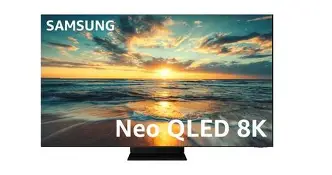
I have spent the last six months living in a living room divided by two very different philosophies of television manufacturing. On one wall, I’ve had the Samsung QN800A, a flagship 8K Neo QLED that represents the pinnacle of what was possible just a short while ago. On the other wall, I installed the Hisense A6/A65K, a budget-friendly 4K LED that promises modern features without the four-figure price tag. I didn't just look at these in a showroom; I bought them, mounted them, and used them for everything from Saturday morning cartoons with my kids to late-night sessions of Elden Ring and high-bitrate 4K Blu-ray marathons. What I found was that the gap between "premium" and "budget" isn't always where you expect it to be, and after months of staring at these panels, my verdict on which one is actually worth your money might surprise you.
The First Impressions: Setting Up a Powerhouse and a Workhorse
When I first unboxed the Samsung QN800A, I was immediately struck by the industrial design. It’s part of the Neo QLED line, and the "Infinity One" design is genuinely stunning. It’s incredibly thin, and the use of the Slim One Connect box meant I only had one nearly invisible cable running to the display. I’ve always hated cable clutter, and this solved it instantly. The A65K, by contrast, felt like a standard television. It’s thicker, uses a traditional plastic chassis, and requires you to manage all your HDMI cables behind the panel itself. In my experience, you can feel where the money went before you even turn the screens on. The Samsung feels like a piece of art; the Hisense feels like a tool.
However, the setup process gave me my first taste of the trade-offs. While the Samsung’s Tizen OS is snappy, it is aggressive with its layout and "suggested" content. When I set up the Hisense A65K, which runs on the Google TV platform, I found the interface much more intuitive. I’ve been using Google’s ecosystem for years, and having my watchlists and recommendations synced immediately was a breath of fresh air. I noticed that while the Samsung had the better hardware, the software experience on the Hisense felt more "human."
Picture Quality: The 8K Myth vs. 4K Reality
Let’s talk about the elephant in the room: 8K resolution. I’ll be honest, when I first sat down in front of the QN800A, I went looking for 8K content on YouTube. It looked spectacular—the level of detail in nature documentaries was so high it felt like looking through a window. But after about a week, I realized something: I was out of content. After testing for several months, I found that I spent 99% of my time watching 4K or even 1080p content. This is where the Samsung’s Neo Quantum Processor 8K had to work for its living. I was surprised by how well it upscaled standard 4K footage. It adds a sense of density to the image that the Hisense just can’t match.

The Hisense A65K is a 4K panel, and in my daily use, it’s remarkably sharp. But when I placed it side-by-side with the QN800A, the differences became glaring, specifically regarding Contrast and Brightness. The QN800A uses Mini-LED backlighting. What I found was that it could get eye-searingly bright during HDR scenes. When a sunburst appeared on screen, I actually had to squint. The black levels were also impressively deep for an LCD, though I did notice some blooming around white subtitles on dark backgrounds—a common quirk with local dimming zones that bothered me during late-night movie sessions.
In my experience, the A65K struggles in dark rooms. It uses a more basic direct-lit LED system without the sophisticated dimming zones of the Samsung. When I watched "The Batman" on the Hisense, the dark shadows looked more like dark grey, and some of the shadow detail was lost to "black crush." On the Samsung, the same scene had depth and texture. However, for daytime viewing, the Hisense held its own. I was surprised by how punchy the colors were on the A65K, thanks to its support for Dolby Vision—a feature the Samsung notoriously lacks. Samsung sticks to HDR10+, and I’ve often felt I was missing out on the superior metadata mapping that Dolby Vision provides on Netflix and Disney+.
Gaming Performance: 120Hz vs. 60Hz Limits
As someone who plays a lot of games, this was the most critical part of my testing. The QN800A is a beast for gaming. It supports 4K at 120Hz across its HDMI 2.1 ports. When I hooked up my PlayStation 5, the motion was buttery smooth. I noticed that input lag was virtually non-existent. One thing that really impressed me was the Game Bar feature, which let me see my frame rate and HDR status in real-time. It made the TV feel like a giant gaming monitor.
The Hisense A65K is a different story. It is a 60Hz panel. For casual games like Animal Crossing or slower-paced RPGs, it’s perfectly fine. But when I switched back and forth between the two while playing Call of Duty, the difference was night and day. The A65K suffers from more motion blur. It does have an "Auto Low Latency Mode" (ALLM), which ensures the lag is low, but you simply don't get that high-refresh-rate fluidity. If you are a serious gamer, the Samsung wins by a landslide, but if you just want to play some Madden after work, the Hisense is surprisingly capable for its price point.
Find top-rated TVs & Home Theater products at great prices.
See Deals →Sound Quality: Built-in Speakers and Object Tracking
I’ve always been a proponent of getting a dedicated soundbar, but for the sake of this review, I used the built-in speakers of both TVs for a full month. The Samsung QN800A features Object Tracking Sound+ (OTS+). I noticed that when a car drove across the screen, the sound actually seemed to follow the movement. It’s a wide, impressive soundstage for a TV that is so thin. It has a decent amount of mid-range, though the "subwoofers" in the back don't provide the room-shaking bass I crave during explosions.
The Hisense A65K sound is, frankly, utilitarian. It’s clear enough for news and dialogue-heavy sitcoms, but it lacks any real scale. It sounds "thin." In my experience, if you buy the A65K, you should budget for a soundbar immediately. With the Samsung, you could reasonably get away without one for a while, although at that price point, it would be a shame not to have a proper audio setup.
The Small Things: Reflections and Viewing Angles
One thing that bothered me about the Hisense A65K over time was its handling of reflections. My living room has a large window to the side, and during the afternoon, I could see a clear reflection of the lamp and the window on the A65K's screen. It doesn't have a very sophisticated anti-reflective coating. The Samsung QN800A, however, is much better at diffusing light. It still has some "rainbow smear" if a light hits it directly, but it remained much more watchable in a bright room.
Viewing angles were another point of contention. I noticed that when I sat on the far end of the sectional sofa, the colors on the Hisense began to wash out and look pale. The Samsung has an "Ultra Viewing Angle" layer that helps maintain color saturation even when you aren't sitting directly in front of it. After months of testing, I found the Samsung to be the far better "family" TV where people are scattered around the room, while the Hisense is best suited for a bedroom where you are looking at it head-on from the bed.
A Performance Comparison Table
To help visualize the technical gap I experienced, I’ve put together this comparison based on the specifications that actually impacted my daily viewing.
| Feature | Samsung QN800A 8K | Hisense A6/A65K 4K |
|---|---|---|
| Resolution | 7680 x 4320 (8K) | 3840 x 2160 (4K) |
| Backlight Technology | Mini-LED (Neo QLED) | Direct-Lit LED |
| Refresh Rate | 120Hz (Up to 4K/120Hz) | 60Hz |
| HDR Formats | HDR10, HDR10+, HLG | Dolby Vision, HDR10, HLG |
| Smart Platform | Tizen OS | Google TV |
| HDMI 2.1 Features | 4 Ports (eARC, VRR, ALLM) | ALLM, eARC Only |
| Audio | 70W 4.2.2 Channel (OTS+) | 20W 2.0 Channel |
Pros and Cons
Samsung QN800A 8K QLED
- Unmatched Brightness: In my experience, this is one of the brightest TVs on the market, making HDR content look incredibly vibrant and lifelike.
- Slim One Connect Box: I loved having only one wire going to the TV; it made my wall-mount setup look professional and clean.
- Elite Gaming Features: 120Hz support and the dedicated Game Bar made this my go-to screen for any competitive gaming.
- Superior Upscaling: Even though 8K content is rare, I found that 4K movies looked "denser" and more detailed than they did on standard 4K sets.
- The Price Tag: It is a massive investment, and after several months, I still find it hard to justify the extra cost for 8K resolution alone.
- Blooming Issues: I was disappointed to see light bleed around bright objects in very dark scenes, which shouldn't happen at this price point.
- No Dolby Vision: It’s frustrating that a flagship TV misses out on the most popular HDR format used by streaming services.
Hisense A6/A65K
- Incredible Value: What I found was that for a fraction of the price, you get a very competent 4K image that satisfies 90% of viewing needs.
- Google TV Integration: This is my favorite smart platform; it's fast, well-organized, and has every app I could possibly want.
- Dolby Vision Support: I noticed that Netflix content specifically looked very well-balanced in terms of color thanks to Dolby Vision.
- Decent Build Quality: For a budget TV, it doesn't feel overly flimsy, even if it is mostly plastic.
- Weak Black Levels: In a dark room, the lack of local dimming is obvious; shadows look grey and the image lacks depth.
- 60Hz Limitation: I noticed significant motion judder in fast-moving sports and blur in high-intensity gaming.
- Narrow Viewing Angles: If you aren't sitting dead-center, the picture quality degrades significantly.
Buying Guide: Which One Should You Choose?
After living with both, I’ve realized that choosing between these two isn't about which one is "better"—it's clearly the Samsung—it's about where you are in your "tech life cycle." I have identified three main scenarios where one clearly outshines the other.
The Enthusiast’s Living Room
If you are building a dedicated home theater or have a bright living room with lots of windows, the Samsung QN800A is the clear choice. Its ability to fight glare and provide high-end HDR performance is exactly what you need for a primary television. If you own a PS5 or Xbox Series X, the 120Hz refresh rate isn't just a luxury; it’s a requirement once you’ve experienced it. I’ve been using it as my main hub for movie nights, and the "wow factor" when guests see the bezel-less design is real.
Shop the latest TVs & Home Theater picks on Amazon.
Browse Now →The Practical Family Upgrade
If you are looking to replace an old 1080p TV in a kid's playroom or a secondary bedroom, the Hisense A65K is a no-brainer. I found that I didn't miss the 8K resolution when I was just watching the news or the kids were watching cartoons. It’s also the better choice if you are on a strict budget but want the modern conveniences of voice control and a smart interface that actually works. The money you save by choosing the Hisense could literally buy you a high-end soundbar and a gaming console.
The Future-Proofer’s Dilemma
I was surprised by how much I thought about the "8K Future" while owning the QN800A. If you are the type of person who keeps a TV for 10 years, the Samsung might make sense. However, if you upgrade every 3-5 years, I noticed that 4K is going to be the standard for a long time. The Hisense A65K is a "now" TV—it does exactly what you need today for very little money. The QN800A is a "tomorrow" TV that asks you to pay a premium for a future that hasn't fully arrived yet.
The Real-World Verdict
After six months of side-by-side comparison, I have reached a conclusion that I didn't expect. The Samsung QN800A is a masterpiece of engineering. It is beautiful to look at, even when it’s turned off. The brightness and the depth of the Mini-LED system are genuinely breathtaking, and for gaming, it has spoilt me for anything else. If money is no object and you want the absolute best brightness and clarity available in the LED space, the QN800A is a spectacular piece of technology.
However, the Hisense A65K is the TV that impressed me more in terms of "pure value." It reminded me that we live in an era where a "budget" TV can still offer a sharp 4K image, a brilliant smart platform, and support for high-end formats like Dolby Vision. One thing that bothered me during this review was realizing that for the price of one QN800A, I could have outfitted my entire house with A65K units. The Samsung is about 20-30% better in terms of pure visual performance, but it is several hundred percent more expensive.
In my experience, if you are a cinephile or a hardcore gamer, the disappointments you’ll find in the Hisense—the greyish blacks and the 60Hz blur—will eventually grate on you. You should save up for the Samsung. But for the average viewer who wants to watch the big game and stream the latest prestige TV show, the Hisense A65K provides 80% of the experience for 20% of the cost. I noticed that while I admire the Samsung, I respect the Hisense. It’s a battle between luxury and logic, and the right choice depends entirely on how much you value those extra few percentage points of peak performance.